On the morning of January 30, 2026, the Center for Forensic Science Research and Education (CFSRE) issued a public alert. The subject line: “Increase in Fatal Overdoses Linked to Novel Synthetic Opioid N-Propionitrile Chlorphine (Cychlorphine).” [1]
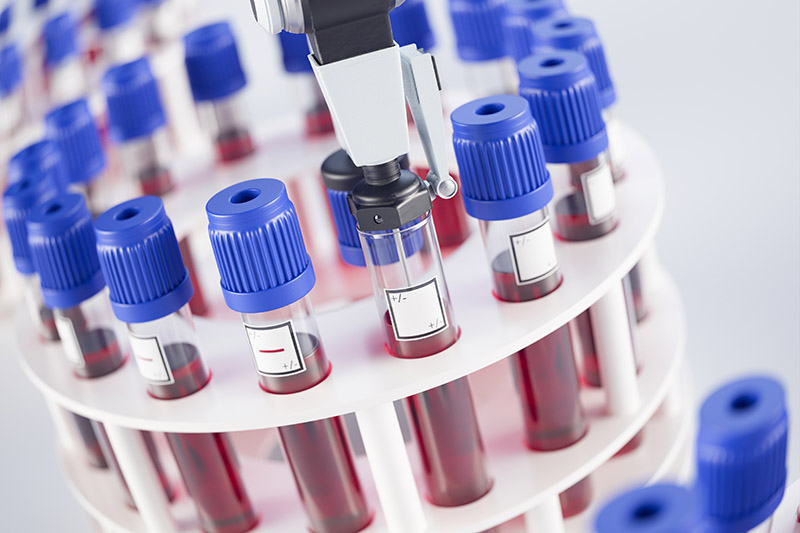
For a forensic toxicologist reading the alert at their bench that morning, the second paragraph was the operational one. Twenty-five blood specimens from fatal overdoses confirmed at CFSRE, the vast majority submitted in late 2025 and early 2026. More than 100 tentative identifications at NMS Labs. The compound first detected at CFSRE in mid-2024 had moved from a curiosity in the literature to a recurring finding in casework. [1]
By that morning, the question for most labs had shifted. It was no longer whether cychlorphine would show up in the case mix. It was whether the panels and quality control behind those panels were built for what the analyte actually does in patient samples.
This brief is published by UTAK Laboratories as a working reference for forensic toxicology labs tracking the orphine compound class. We will update it as new peer-reviewed findings and surveillance data emerge.
What Are Orphines?
Orphines are a class of potent synthetic opioids built around substituted piperidine benzimidazol-2-one structures. [2,10] The class is distinct from the better-known nitazene class (benzimidazoles) and from fentanyl analogs, even though all three share full μ-opioid receptor agonism as the primary mechanism. [4,7]
The class is named for brorphine (the first benzimidazol-2-one to appear on the illicit market) and includes a growing list of structural analogues. The named compounds reported in casework to date include: [2,10,15]
- Brorphine: the prototype; internationally controlled in 2022
- Chlorphine
- N-Propionitrile Chlorphine (Cychlorphine): the most widely reported orphine analogue currently in circulation
- Spirochlorphine (R-6890)
- Spirobrorphine
- 5,6-Dichloro Desmethylchlorphine (SR-17018)
- 5,6-Dichloro Brorphine (SR-14968)
- Orphine, Fluorphine, Iodorphine: synthesized and pharmacologically characterized in peer-reviewed research; detection status varies [4]
The core scaffold traces back to a 1967 Janssen patent for derivatives of benzimidazolinyl piperidine. [4] As the UNODC notes, structural diversification accelerated after brorphine itself was internationally controlled, with multiple halogenated and cyclized analogues appearing approximately four years after brorphine controls took effect. [2,15]
The Orphines Timeline
The orphine timeline runs through a sequence of regulatory pressure and supply-chain substitution.
May 27, 2026: DEA HQ reported detection of 5-chloro desmethyl chlorphine in a Knoxville, TN seizure at 34% purity, a new orphine analogue not previously found in NFLIS. The sample, a white powder originally suspected to contain fentanyl, was seized by Knoxville Police and transferred to DEA through the DEA Overdose Surveillance Exchange (DOSE) program. [17]
2018: Brorphine first synthesized by Kennedy et al. as part of a series of μ-opioid receptor agonists with high G-protein signaling bias. [8]
2019: Brorphine identified in the U.S. illicit market through DEA monitoring. [7]
2020: Brorphine added to the UNODC Early Warning Advisory; DEA Diversion Control Division evaluation issued. [7]
June 2022: Brorphine placed under international control. [10]
Mid-2024: N-Propionitrile chlorphine (cychlorphine) first detected at CFSRE. [1]
July 2025: Chinese government implemented generic controls on the nitazene class. [1]
Mid-2025 onward: Overall positivity for nitazene analogues declined; positivity for orphine analogues increased, led by cychlorphine. [1,11]
September 2025: Ohio Bureau of Criminal Investigation first identified cychlorphine in a U.S. drug seizure. The sample had been seized in July 2025 and submitted for testing in August. [16]
November 2025: Cychlorphine identified in Toronto drug-checking programs. [3]
December 2025: First peer-reviewed report of a non-fatal cychlorphine overdose (Ohio case) published in Clinical Toxicology. [3]
January 30, 2026: CFSRE issued the public alert on fatal overdoses linked to cychlorphine, plus a companion brief on the broader orphine compound class. [1,2]
February 2026: UNODC issued a bulletin on increasing nitazene and orphine analogues and the implications for test-strip-based harm reduction. [11]
April 30, 2026: The White House Office of National Drug Control Policy issued its first-ever Drug Threat Notice, naming cychlorphine specifically. The notice reported cychlorphine detection across all four U.S. Census regions, the highest concentrations in Ohio, Texas, and Tennessee, and at least 55 deaths nationally between 2025 and 2026. [18]
May 12, 2026: DEA Public Safety Advisory named cychlorphine alongside fentanyl, xylazine, medetomidine, and nitazenes as part of the evolving emerging-threat profile. [14]
Receptor Binding & Detection
Orphines bind to the μ-opioid receptor (MOR) with nM-range affinities. Vandeputte et al. (2024) reported MOR binding constants (Ki) of 1.92 nM for chlorphine (the highest affinity in the analogue series they characterized), 6.91 nM for orphine, and 12.5 nM for fluorphine, with the full series ranging from 1.92 to 133 nM. [4] For context, the Sprague et al. (2025) Clinical Toxicology report references chlorphine’s 1.92 nM MOR Ki against fentanyl’s 6.29 nM MOR Ki in the same comparative framework. [3] In vivo characterization in mouse models (0.01 to 15 mg/kg IP dose range) showed that chlorphine and brorphine induced the highest levels of antinociception in the series; fluorphine, chlorphine, and brorphine produced pronounced respiratory depression. [4]
For cychlorphine specifically, the CFSRE alert references in vitro pharmacology data showing the compound to be approximately 10 times more potent than fentanyl. This figure is sourced to a personal communication from Vandeputte and Stove and has not yet appeared in a published in vivo report. [1] In our experience, the operational implication for forensic toxicology labs is not the specific potency multiple, which will be refined as more peer-reviewed data emerges. The operational fact that matters is structural: the orphines are not detected by immunoassay test strips designed for nitazenes or fentanyl. [11] LC-MS/MS with reference standards remains the analytical standard.
Reported post-mortem blood concentrations of cychlorphine, based on a UNODC compilation of 78 cases from the USA and UK, show a median of 29 ng/mL with a range of 5 to 183 ng/mL. [12] Most cases involved polysubstance toxicity. Co-detected substances frequently include nitazenes, other orphine analogues, xylazine, medetomidine, benzodiazepines, and N,N-dimethylamphetamine. [12]
The Surveillance Picture
As of mid-2026, cychlorphine has been reported to the UNODC Early Warning Advisory by 10 countries and identified in approximately 182 drug seizures globally. [12] The CFSRE has confirmed 25 fatal overdose blood specimens (most from late 2025 and early 2026), and NMS Labs has more than 100 tentative identifications. [1]
Regional surveillance has surfaced additional clusters. The Knox County Regional Forensic Center in Tennessee has linked cychlorphine to at least 41 deaths across 11 East Tennessee counties between July 2025 and February 2026, the largest single regional cluster reported to date. [12, 18] Regional numbers in active casework continue to evolve as additional cases complete laboratory confirmation. In Ohio, the state Bureau of Criminal Investigation confirmed eight seized items containing cychlorphine or a related compound between October 2025 and January 31, 2026. [16] Germany’s national early-warning system has issued alerts, and Toronto drug-checking programs have identified cychlorphine in the local supply. [11,12]
The CFSRE notes that as analytical reference standards become more widely available, the detected orphine analogue list continues to expand. [2,15] The class is structurally diversifying faster than reference-standard availability in some cases, which means a lab’s current detection capability depends in part on which specific analogues are covered by the reference materials on hand.
Implications for QC
Three points surface consistently across the surveillance literature and in the field.
Detection methods built for nitazenes will not cleanly cover the orphines. The benzimidazole nitazene class and the benzimidazol-2-one orphine class are structurally distinct. A panel optimized for nitazenes may not produce reliable detection of orphine analogues without method updates. [2,4]
Reference-standard availability is uneven across the orphine list. Some analogues (brorphine, cychlorphine) are well-resourced. Others (newer halogenated and cyclized analogues such as the 5-chloro desmethyl chlorphine detected in Knoxville in May 2026) may not yet have broadly available commercial reference materials. [15]
QC built for one compound class is not analytically equivalent for another. A passing control on a method validated against nitazenes confirms the method is working for nitazenes. It does not confirm that the materials behind the method reflect what an orphine analyte actually does in a patient sample. The real question, in our experience, is whether the QC has been validated against the specific analytes the lab is testing, in the matrix it’s running, at the concentrations its method targets.
Clinical Response Notes
For clinical and public-health partners working alongside forensic labs:
- Mortality data lag detection by months. CDC officials have acknowledged that overdose investigations, toxicology testing, and death certifications all take time, and that by the time a compound appears in national mortality reporting, it has typically already been flagged through laboratory identification and product surveillance.
- Naloxone may require multiple doses to reverse an orphine overdose, according to DEA and CFSRE communications. [14]
- Immunoassay test strips designed for nitazenes or fentanyl do not detect orphines. [11]
Frequently Asked Questions
The CFSRE alert references cychlorphine as roughly 10x more potent than fentanyl in vitro. How reliable is that figure for operational planning?
The “10x in vitro” figure cites Vandeputte and Stove personal communication in the CFSRE alert. [1] The published Vandeputte et al. (2024) paper reports MOR binding affinities (Ki values) for chlorphine and related analogues, with chlorphine at 1.92 nM as the highest-affinity compound in the characterized series. [4] In vitro receptor affinity is a leading indicator of in vivo potency, but the two are not interchangeable, and a published in vivo human-relevant potency study for cychlorphine specifically has not yet appeared. The operational point for QC purposes is independent of the exact potency multiple: orphines are structurally distinct from nitazenes and require their own detection and quality-control treatment.
If our nitazene method is performing well, can we adapt it for the orphines without revalidation?
The benzimidazole nitazene class and the benzimidazol-2-one orphine class share some structural similarity but are not analytically equivalent. Reference standards, retention times, MS fragmentation patterns, and quantitative response factors all differ. A method validated against nitazenes may detect orphines as unidentified peaks, may miss them entirely, or may produce quantitation errors. Method updates and reference standards for the specific orphines a lab is targeting are the standard path, and QC needs to be validated against those specific analytes rather than carried over from the nitazene workflow.
Are reference standards available for all the named orphine analogues?
Availability varies. Brorphine and cychlorphine reference standards are now widely available. Some newer analogues (the spirochlorphines, dichloro derivatives, and recently identified compounds such as 5-chloro desmethyl chlorphine) may not yet have broad commercial coverage. [15] Labs targeting these compounds may need to coordinate with reference-standard suppliers and with method-development resources as the analogue list grows.
What concentrations should we expect in patient samples?
The UNODC compilation of 78 cychlorphine post-mortem cases from the USA and UK reports a median blood concentration of 29 ng/mL with a range of 5 to 183 ng/mL. [12] Most cases involve polysubstance toxicity, so reported concentrations should be interpreted in the context of co-detected compounds (nitazenes, xylazine, medetomidine, benzodiazepines, other orphines). Matrix-specific data for urine and oral fluid is more limited in the current literature.
How is UTAK keeping this brief current?
This reference draws on peer-reviewed research (Vandeputte et al. 2024, Grafinger et al. 2021, Verougstraete et al. 2020, Sprague et al. 2025, and the broader literature), regulatory and surveillance communications (CFSRE January 2026 alerts, UNODC February and May 2026 bulletins, EUDA European Drug Report 2025, DEA Public Safety Advisory May 2026), and regional forensic data published through state and county forensic centers. UTAK Laboratories tracks the orphine class as part of the broader emerging-compound landscape we work in for forensic toxicology QC. We update this brief as new peer-reviewed findings and surveillance data become available.
How UTAK Can Help
For more than 50 years, UTAK Laboratories has built Purpose Built quality control materials for forensic and clinical toxicology labs. We maintain this reference because the labs we work with need access to current information about emerging compound classes that drive method changes. We will update it as new peer-reviewed and surveillance data emerge.
Reach out at welovecontrol@utak.com or call 888.882.5522.
References
[1] Center for Forensic Science Research and Education. (2026, January 30). Increase in Fatal Overdoses Linked to Novel Synthetic Opioid N-Propionitrile Chlorphine (Cychlorphine). https://www.cfsre.org/nps-discovery/public-alerts/increase-in-fatal-overdoses-linked-to-novel-synthetic-opioid-n-propionitrile-chlorphine-cychlorphine
[2] Center for Forensic Science Research and Education. (2026, January 30). Emerging Global Synthetic Opioid Threats: Benzimidazol-2-ones – The Orphines. https://www.cfsre.org/nps-discovery/public-alerts/emerging-global-synthetic-opioid-threats-benzimidazol-2-ones-the-orphines
[3] Sprague, J.E., Toms, J.A., Ratermann, C.F. (2025, December). Non-fatal opioid overdose associated predominantly with the benzimidazolone, cychlorphine. Clinical Toxicology. https://doi.org/10.1080/15563650.2025.2594070
[4] Vandeputte, M.M., et al. (2024). Elucidating the harm potential of brorphine analogues as new synthetic opioids: Synthesis, in vitro, and in vivo characterization. Neuropharmacology / ScienceDirect. https://www.sciencedirect.com/science/article/abs/pii/S002839082400282X
[5] Grafinger, K.E., Wilde, M., Otte, L., Auwärter, V. (2021). Pharmacological and metabolic characterization of the novel synthetic opioid brorphine and its detection in routine casework. Forensic Science International. https://www.sciencedirect.com/science/article/abs/pii/S0379073821003091
[6] Verougstraete, N., et al. (2020). First report on brorphine: the next opioid on the deadly new psychoactive substances’ horizon? Journal of Analytical Toxicology, bkaa094.
[7] Vandeputte, M.M., et al. (2022). The Rise and Fall of Isotonitazene and Brorphine: Two Recent Stars in the Synthetic Opioid Firmament. Journal of Analytical Toxicology, 46(2), 115. https://academic.oup.com/jat/article/46/2/115/6317457
[8] Kennedy, N.M., et al. (2018). Optimization of a Series of Mu Opioid Receptor (MOR) Agonists with High G Protein Signaling Bias. Journal of Medicinal Chemistry, 61(19), 8895–8907.
[9] Center for Forensic Science Research and Education. Chlorphine: NPS Discovery New Drug Monograph. https://www.cfsre.org/images/monographs/Chlorphine-New-Drug-Monograph-NPS-Discovery.pdf
[10] UNODC Early Warning Advisory on New Psychoactive Substances. Orphine analogues: Substance group details. https://www.unodc.org/LSS/SubstanceGroup/Details/09f4734d-aadb-44a0-aa76-2e8816b1cc02
[11] UNODC. (2026, February). Increasing nitazene and orphine analogues (synthetic opioids) and the implications for the use of test strips. https://www.unodc.org/LSS/Announcement/Details/e69b2ff5-5b91-4eea-8e1f-802ca7ad5080
[12] UNODC. (2026, May). The emerging threat of cychlorphine: A new synthetic opioid raising concerns globally for public health. https://www.unodc.org/LSS/Announcement/Details/9403c3d1-12b9-49ac-8604-7da583d38d3b
[13] European Union Drugs Agency. (2025, June 6). European Drug Report 2025. https://www.euda.europa.eu/system/files/documents/2025-06/edr-2025-full-book-6.06.2025-en.pdf
[14] United States Drug Enforcement Administration. (2026, May 12). Public Safety Advisory. https://www.dea.gov/press-releases/2026/05/12/public-safety-advisory
[15] CFSRE / Colombo Plan. (2026, February). Colombo Plan Health Alert: Benzimidazol-2-ones, The Orphines. https://www.cfsre.org/images/content/reports/public_alerts/Colombo_Plan_Orphine_Alert_Feb_2026_v3.pdf
[16] National Institute of Justice. Forensic Toxicology: Topic page including the CFSRE alert on N-Propionitrile Chlorphine (Cychlorphine). https://nij.ojp.gov/topics/forensics/forensic-toxicology
[17] National Forensic Laboratory Information System / U.S. Drug Enforcement Administration. (2026, May 27). Public Alert: 5-chloro desmethyl chlorphine detected in Knoxville, TN seizure. https://www.nflis.deadiversion.usdoj.gov/ (DEA HQ social post: https://x.com/DEAHQ/status/[May 27 2026])
[18] White House Office of National Drug Control Policy. (2026, April 30). ONDCP Drug Threat Notice: Cychlorphine, A Synthetic Opioid Involved in at Least 55 Deaths Across the United States, Has Potential to Spread Across the Nation. https://www.whitehouse.gov/ondcp/ (Verify exact URL with ONDCP; corroborated by multiple independent reports including HSToday and Hoodline.)