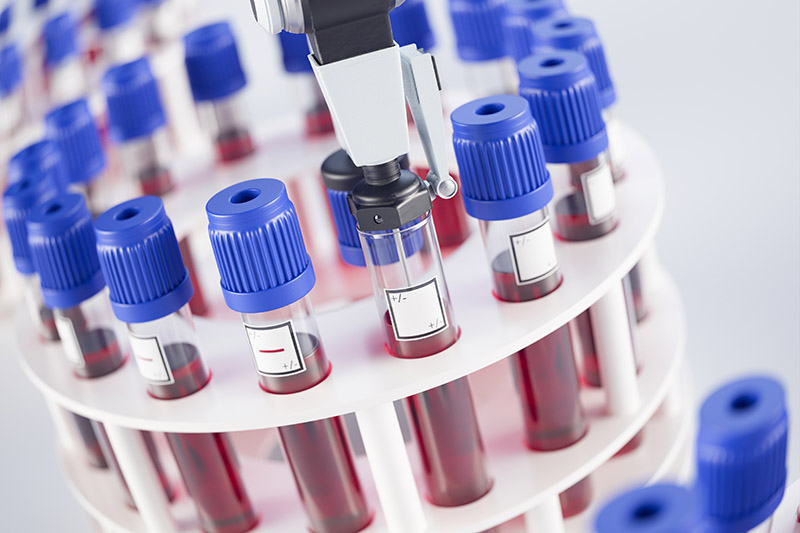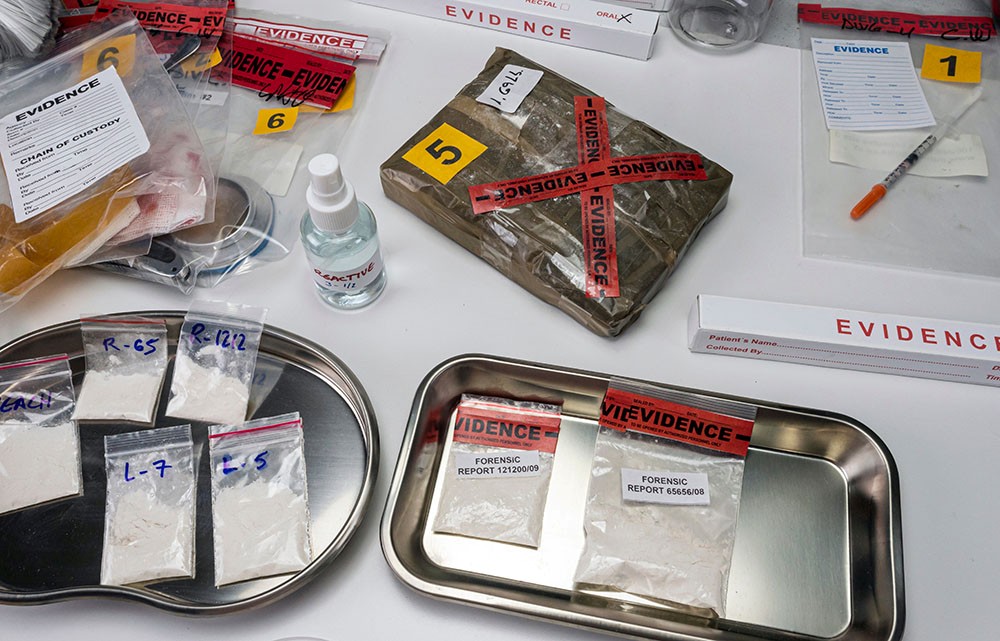
A medical examiner calls with a case that doesn’t add up. The immunoassay came back positive for fentanyl, but confirmation testing found nothing. Meanwhile, the death scene and clinical picture strongly suggest synthetic opioid involvement. The question isn’t whether the lab made an error. It’s whether the panel is missing an analogue that wasn’t on anyone’s radar six months ago.
For clinical and forensic laboratories, comprehensive fentanyl analogue detection capabilities are no longer optional. They are essential for accurate diagnosis, effective treatment monitoring, and reliable cause-of-death determinations. This guide provides an up-to-date overview of the fentanyl analogues most relevant to laboratories in 2026, practical strategies for building detection capabilities, and quality control considerations to ensure consistent, confident results.
At UTAK, we’ve been supporting toxicology laboratories through every phase of the synthetic opioid crisis, from the early emergence of illicit fentanyl through the proliferation of analogues that continues today. That experience has given us a front-row seat to the QC challenges laboratories face when the drug supply shifts faster than commercial testing solutions can keep pace. What follows reflects both published research and what we’ve learned working alongside labs navigating these issues in real time.
The Current Fentanyl Analogue Landscape
While fentanyl itself dominates the synthetic opioid supply, the analogue landscape continues to shift in ways that directly impact laboratory testing strategies.
High-Priority Analogues for Laboratory Testing
Para-fluorofentanyl and fluorofentanyl variants have emerged as the most prevalent analogues in forensic casework since 2020, with fluorofentanyl continuing to dominate compared to other analogues in postmortem investigations. These compounds maintain high potency while presenting distinct analytical challenges due to their structural similarity to the parent compound.
Acetylfentanyl remains clinically significant, particularly in combination with other fentanyls. Published case series report blood concentrations ranging from less than 1 ng/mL to over 2,000 ng/mL in fatal intoxications, highlighting the importance of sensitive detection methods. When acetylfentanyl appears alongside parent fentanyl, both compounds require quantification to understand the exposure pattern.
Carfentanil deserves particular attention due to its extreme potency, approximately 100 times more potent than fentanyl (1). Despite relatively lower prevalence in recent surveillance data, its detection requires dedicated analytical attention because standard fentanyl immunoassays typically do not cross-react with carfentanil (2). If your laboratory handles postmortem samples or serves a region with documented carfentanil exposure, this isn’t an analogue you can afford to miss.
The adulterant landscape adds complexity to fentanyl detection. According to the 2025 National Drug Threat Assessment, drug dealers increasingly adulterate fentanyl with veterinary tranquilizers like xylazine, anesthetics such as ketamine, and other synthetic opioids including nitazenes (3). Xylazine remains the top adulterant found in fentanyl powder, while the emergence of medetomidine represents a concerning new development. The real question for your laboratory: does your testing panel address the substances actually showing up together in your region?
What Immunoassay Screening Detects and Misses
Commercial fentanyl immunoassays serve as valuable screening tools, but their cross-reactivity profiles create gaps in analogue detection that laboratories need to understand when designing testing algorithms and interpreting results.
Cross-Reactivity Patterns
A comprehensive pilot study evaluating 30 fentanyl analogues across 19 commercially available immunoassay kits revealed that while most assays reliably detect their target analyte (typically fentanyl or norfentanyl), performance varies significantly with structurally diverse analogues (2). Key findings include:
Carfentanil detection was limited to kits specifically designed for its recognition. Standard fentanyl immunoassays failed to detect carfentanil at clinically relevant concentrations, and some studies found no reactivity at concentrations up to 1,000 ng/mL (2).
Norfentanyl cross-reactivity varies considerably between platforms. Some assays demonstrate limited cross-reactivity with norfentanyl, meaning specimens with detectable norfentanyl but low fentanyl concentrations may screen negative. Published clinical data suggest that a meaningful proportion of LC-MS/MS-confirmed positive specimens contain norfentanyl at concentrations exceeding that of the parent compound, underscoring the practical clinical implications of limited norfentanyl cross-reactivity in screening assays (2).Structurally diverse analogues like 4-methoxybutyrylfentanyl and 3-methylfentanyl were poorly detected by most tested kits. This variability means that negative immunoassay screens cannot definitively rule out fentanyl analogue exposure (2).
Practical Implications for Laboratory Workflows
These cross-reactivity limitations point to a straightforward workflow principle: when clinical history or case circumstances suggest synthetic opioid involvement, go directly to confirmation testing. Don’t let a negative immunoassay screen close the door. For forensic casework where comprehensive drug detection is essential, immunoassay screening should be viewed as a preliminary step rather than a definitive determination. Laboratories serving regions with documented carfentanil or diverse analogue exposure may benefit from using multiple immunoassay platforms with complementary cross-reactivity profiles, though this approach increases cost and complexity.
Building Comprehensive LC-MS/MS Confirmation Panels
Liquid chromatography-tandem mass spectrometry (LC-MS/MS) remains the gold standard for definitive fentanyl analogue identification and quantification. Method development should balance analytical comprehensiveness with practical workflow considerations.
Core Panel Considerations
A robust synthetic opioid panel for 2026 should include fentanyl and its primary metabolite norfentanyl as baseline analytes, fluorofentanyl variants (para-fluorofentanyl, ortho-fluorofentanyl, meta-fluorofentanyl), acetylfentanyl and acetyl norfentanyl, carfentanil and norcarfentanil for laboratories requiring this capability, cyclopropylfentanyl and its metabolite, 4-ANPP (despropionyl fentanyl) as a precursor marker, and butyrylfentanyl and isobutyrylfentanyl.
Published methods have demonstrated the feasibility of multiplex detection of 17-24 fentanyl analogues and metabolites in a single analytical run, with limits of detection ranging from 0.01 to 0.5 ng/mL in blood and urine matrices (4). Validated methods achieving limits of quantitation at 0.1-0.5 ng/mL provide the sensitivity necessary for detecting both clinical therapeutic levels and low-concentration postmortem findings.
Analytical Challenges
Isomeric compounds present particular challenges for chromatographic separation. Butyryl/isobutyrylfentanyl and para-fluorobutyrylfentanyl/para-fluoroisobutyrylfentanyl pairs often co-elute and cannot be differentiated by mass spectrometry alone due to identical fragmentation patterns (4). In our experience, most laboratories find that transparent reporting (“butyrylfentanyl/isobutyrylfentanyl”) is sufficient for clinical and forensic interpretation. The real question is whether your testing population makes isomer-specific identification matter.
Matrix effects can significantly impact method performance across different sample types. Published validation data document variable ionization suppression and enhancement across fentanyl analogues, with matrix effects ranging from approximately 57% to 118% depending on the specific analyte (4). This underscores the importance of appropriate internal standards and matrix-matched calibration, particularly when the same method is applied to blood, urine, and alternative matrices like oral fluid or hair.
Clinical Versus Postmortem Reference Ranges
Interpreting fentanyl and analogue concentrations requires understanding the differences between clinical therapeutic levels and postmortem findings, as well as the limitations inherent in postmortem concentration interpretation.
Clinical Therapeutic Monitoring
The reported therapeutic reference range for fentanyl in serum is 1-2 ng/mL for analgesia (5, 6), though toxicity may occur at concentrations below this threshold in opioid-naive individuals, and patients receiving chronic fentanyl therapy under physician supervision may routinely exceed these levels. This overlap between therapeutic, toxic, and lethal concentration ranges emphasizes that laboratory results must be interpreted in clinical context rather than against absolute thresholds.
For clinical laboratories supporting pain management and addiction medicine programs, analytical sensitivity at sub-ng/mL concentrations enables detection of low-level exposure and supports clinical decision-making about treatment adherence and illicit opioid use.
Postmortem Considerations
Postmortem redistribution significantly affects fentanyl concentrations, complicating interpretation in forensic casework. Research demonstrates that postmortem fentanyl blood concentrations can be up to nine times higher than antemortem serum levels at equivalent doses, with significant increases occurring as early as 6-8 hours after death (7, 8). By 24 hours postmortem, concentrations may increase 3-5 fold compared to antemortem reference values (8).
Published postmortem case series illustrate the wide concentration ranges encountered in forensic practice. Peripheral blood fentanyl concentrations in accidental fentanyl intoxication deaths with substance abuse history averaged 26.4 ng/mL, more than twice the mean of 11.8 ng/mL in deaths attributed to natural causes in individuals with therapeutic fentanyl use (5). However, the very wide and overlapping ranges of postmortem fentanyl concentrations limit the utility of correlating specific concentrations with cause of death without considering the complete case circumstances.
For laboratories serving both clinical and forensic populations, this concentration spread has direct QC implications. A control material validated at therapeutic levels tells you nothing about performance at 25 ng/mL. If your caseload includes postmortem work, your QC program needs to verify accuracy across the full range you actually report, not just the range that’s easiest to source.
Quality Control Program Design for Fentanyl Analogue Panels
Robust quality control programs are essential for maintaining confidence in fentanyl analogue detection. QC design should address the unique challenges posed by multi-analyte panels, concentration ranges spanning several orders of magnitude, and the evolving analogue landscape.
Multi-Level Control Strategy
Given the wide concentration ranges encountered in both clinical and forensic settings, laboratories should implement QC materials at multiple concentration levels. A minimum of two levels, one near the limit of quantitation and one at mid-range concentrations, supports verification across the reportable range. For forensic laboratories encountering high-concentration postmortem samples, a third high-level control may be warranted.
Each analogue in the panel ideally should be represented in QC materials, though practical considerations of cost and availability may require strategic selection of representative compounds. At minimum, QC should include parent fentanyl and norfentanyl, one or more fluorofentanyl variants representing current prevalence, and acetylfentanyl as a commonly encountered analogue.
Matrix Selection Principles
QC matrix selection directly impacts the validity of analytical results. Human biological matrices offer advantages over synthetic or charcoal-stripped alternatives by matching the complexity and potential interferences present in patient and forensic samples. When QC materials do not adequately represent authentic specimen characteristics, matrix effects that impact analyte recovery may go undetected during routine quality monitoring.
Laboratories testing multiple specimen types should evaluate whether a single QC matrix adequately represents all sample types or whether matrix-specific controls are needed. Blood, urine, and oral fluid each present distinct analytical challenges that may warrant separate QC verification.
Stability Considerations
Fentanyl and its analogues generally demonstrate good stability when properly stored, but laboratories should verify stability data specific to their QC materials and storage conditions. Freeze-thaw stability, open-vial stability, and long-term storage stability all merit documentation, particularly for custom QC formulations. Certificates of analysis should include stability data and assigned shelf life to support laboratory quality assurance documentation.
When to Expand Your Analogue Panel
The fentanyl analogue landscape continues to evolve, and laboratories must balance comprehensive detection capabilities against practical resource constraints. A structured approach to panel expansion helps ensure that new analytes are added based on evidence rather than speculation.
Surveillance-Based Decision Making
Regional and national surveillance data provide the foundation for informed panel expansion decisions. The DEA’s Emerging Threat Reports and National Forensic Laboratory Information System (NFLIS) data identify analogues appearing in drug seizures and forensic cases. State public health laboratories and medical examiner networks often publish regional trend data that may be more relevant for local testing needs than national statistics.
Laboratories should establish routine processes for reviewing surveillance data and evaluating whether new analogues warrant addition to existing panels. The documented emergence of fluorofentanyl variants since 2020 and the more recent identification of medetomidine in fentanyl supplies (3) illustrate how surveillance information translates into testing requirements.
Practical Expansion Triggers
Beyond surveillance data, several practical factors may trigger panel expansion. These include requests from clinical partners or medical examiners encountering unexplained overdoses, positive immunoassay screens that fail to confirm with existing methods, case-specific requests for analogues outside current panel scope, and regulatory or accreditation requirements for specific analytes.
When expansion is warranted, laboratories should ensure that reference standards, internal standards, and QC materials are available for new analytes before implementation.
Looking Ahead
The synthetic opioid landscape demands laboratories maintain both comprehensive detection capabilities and the agility to respond when something new appears in the drug supply. We’ve seen laboratories navigate every phase of this crisis, from the early days of illicit fentanyl through the current proliferation of analogues and adulterants. The ones who stay ahead share a few consistent practices: they match their panels to documented regional needs rather than chasing every theoretical analogue, they implement multi-level QC that covers the concentration ranges they actually encounter, and they build relationships with partners who can move quickly when the situation changes.
Our technical team has worked through these challenges across hundreds of laboratory implementations. If you’re building out a fentanyl analogue panel, troubleshooting QC issues, or trying to figure out how to respond to something new showing up in your caseload, we’re here to talk through your specific situation.
Frequently Asked Questions: Fentanyl Analogue Detection
1. Why doesn’t my standard fentanyl immunoassay detect carfentanil?
Most commercial fentanyl immunoassays are designed with antibodies that target the structural features of fentanyl and closely related analogues. Carfentanil has a distinct carbomethoxy group at the 4-position of the piperidine ring that reduces antibody recognition by standard fentanyl assays. Studies evaluating cross-reactivity across multiple commercial platforms have consistently found that carfentanil is only reliably detected by kits specifically designed for its recognition (2). If your laboratory serves a population with documented carfentanil exposure or handles forensic cases where comprehensive synthetic opioid detection is required, dedicated carfentanil immunoassay screening or direct LC-MS/MS confirmation may be necessary.
2. What is the minimum number of fentanyl analogues my LC-MS/MS panel should include?
Panel composition should be driven by your laboratory’s patient population, regional drug trends, and testing purpose. At minimum, a clinically useful panel should include fentanyl, norfentanyl (the primary metabolite), and at least one fluorofentanyl variant given their current prevalence. For forensic laboratories or those serving regions with diverse analogue exposure, a more comprehensive panel of 15-24 compounds provides broader coverage (4). The key is matching your panel to documented regional needs rather than attempting to detect every possible analogue. Regular review of DEA Emerging Threat Reports, NFLIS data, and local medical examiner findings can help inform panel composition decisions.
3. How do postmortem fentanyl concentrations differ from clinical levels, and why does this matter for QC?
Postmortem redistribution can increase fentanyl blood concentrations by 3-9 times compared to antemortem levels, with notable changes occurring as early as 6-8 hours after death (7, 8). This means forensic laboratories routinely encounter concentrations far exceeding the 1-2 ng/mL therapeutic range seen in clinical settings. For quality control purposes, this concentration difference matters because laboratories testing both clinical and postmortem samples need QC materials at multiple concentration levels to verify performance across their entire reportable range. A low-level control near the limit of quantitation validates sensitivity for clinical monitoring, while a higher-level control ensures accuracy at the elevated concentrations common in postmortem casework. In our experience, laboratories that skip the high-level control often don’t discover linearity issues until they’re looking at a case that matters.
4. Can I use the same QC materials for blood, urine, and oral fluid testing?
While it may be tempting to simplify QC programs by using a single matrix across all specimen types, each matrix presents distinct analytical challenges that may not be revealed by cross-matrix QC. Ion suppression, extraction efficiency, and potential interferences vary between blood, urine, and oral fluid. Best practice involves using matrix-matched QC materials, meaning blood-based QC for blood testing, urine-based QC for urine testing, and so forth. This approach helps ensure that your QC program reflects the analytical conditions your method encounters with authentic patient or forensic specimens. The real question is whether the cost savings from a single-matrix approach are worth the risk of missing matrix-specific issues that could affect patient results.
5. How often should I review and potentially expand my fentanyl analogue panel?
Establishing a routine review process, ideally quarterly, helps laboratories evaluate whether current panels meet evolving detection needs. During each review, examine regional surveillance data from sources like DEA reports, state public health laboratories, and medical examiner networks. Also consider feedback from clinical partners, any cases where positive immunoassay screens failed to confirm, and requests for analogues outside your current scope. The fentanyl analogue landscape has demonstrated its ability to shift, as seen with the emergence of fluorofentanyl variants since 2020 and the recent appearance of medetomidine in the fentanyl supply (3). Proactive panel review positions laboratories to respond to emerging threats rather than reacting after detection gaps become apparent.
6. What should I do when I need QC materials for a newly emerging analogue that isn’t commercially available?
When commercial QC options are not yet available for emerging analogues, laboratories have several approaches to consider: working with QC vendors who offer custom formulation services, preparing in-house QC materials if the laboratory has the capability and regulatory framework to do so, or temporarily using spiked negative matrix samples while awaiting commercial availability. Each approach has tradeoffs in terms of documentation, traceability, and resource requirements.
In our experience, the critical factor is turnaround time. When a new analogue shows up in your caseload, you need QC materials in weeks, not months. That’s where working with a vendor experienced in rapid custom formulation makes a real difference. The ability to get a custom QC into your hands quickly, with appropriate documentation and stability data, can mean the difference between validating your method promptly and operating without adequate quality assurance while you wait. We’ve seen this play out repeatedly as new analogues emerge, and laboratories that have established relationships with responsive QC partners are consistently better positioned to add testing capability when it matters.
7. Why do some fentanyl analogues co-elute on LC-MS/MS, and how should I handle this in reporting?
Isomeric fentanyl analogues, such as butyrylfentanyl/isobutyrylfentanyl and para-fluorobutyrylfentanyl/para-fluoroisobutyrylfentanyl pairs, share identical molecular masses and often produce indistinguishable fragmentation patterns in tandem mass spectrometry (4). Unless chromatographic conditions can achieve baseline separation (which is often not achievable with standard methods), these isomers cannot be definitively differentiated. The appropriate approach is transparent reporting that acknowledges this limitation. Report results as “butyrylfentanyl/isobutyrylfentanyl” rather than claiming specific isomer identification that the method cannot support. Your laboratory’s validation documentation should clearly describe which analytes can and cannot be chromatographically resolved, and your reports should reflect these validated capabilities. For most clinical and forensic purposes, isomer-specific identification is not necessary for case interpretation.
Have additional questions about fentanyl analogue detection or QC program design?
Our technical team has worked through these challenges with laboratories across clinical, forensic, and research settings. We’re happy to talk through your specific situation and share what we’ve learned. Contact us today for more information.
References
1. Drug Enforcement Administration. Carfentanil: A Synthetic Opioid Unlike Any Other. DEA.gov. May 2025. Available at: https://www.dea.gov/stories/2025/2025-05/2025-05-14/carfentanil-synthetic-opioid-unlike-any-other
2. Wharton RE, Casbohm J, Hoffmaster R, Brewer BN, Finn MG, Johnson RC. Detection of 30 Fentanyl Analogs by Commercial Immunoassay Kits. Journal of Analytical Toxicology. 2021;45(2):111-116. Available at: https://academic.oup.com/jat/article/45/2/111/6024639
3. Drug Enforcement Administration. 2025 National Drug Threat Assessment. May 2025. Available at: https://www.dea.gov/documents/2025/2025-05/2025-05-13/national-drug-threat-assessment
4. Strayer KE, Antonides HM, Juhascik MP, Daniulaityte R, Sizemore IE. LC-MS/MS-Based Method for the Multiplex Detection of 24 Fentanyl Analogues and Metabolites in Whole Blood at Sub ng mL⁻¹ Concentrations. ACS Omega. 2018;3(1):514-523. Available at: https://pubs.acs.org/doi/10.1021/acsomega.7b01536
5. Gill JR, Lin PT, Nelson L. Reliability of Postmortem Fentanyl Concentrations in Determining the Cause of Death. Journal of Medical Toxicology. 2013;9(1):34-41. Available at: https://pmc.ncbi.nlm.nih.gov/articles/PMC3576505/
6. European Monitoring Centre for Drugs and Drug Addiction. Fentanyl Drug Profile. EUDA. Available at: https://www.euda.europa.eu/publications/drug-profiles/fentanyl_en
7. Andresen H, Gullans A, Veselinovic M, et al. Fentanyl: Toxic or Therapeutic? Postmortem and Antemortem Blood Concentrations After Transdermal Fentanyl Application. Journal of Analytical Toxicology. 2012;36(3):182-194. Available at: https://academic.oup.com/jat/article-abstract/36/3/182/887968
8. Reiter A, Mueller A, Otto B, Anders S, Falckenberg M, Iwersen-Bergmann S, et al. Fast Increase of Postmortem Fentanyl Blood Concentrations After Transdermal Application: A Call to Careful Interpretation. Forensic Science International. 2019;302:109896. Available at: https://pubmed.ncbi.nlm.nih.gov/31426021/