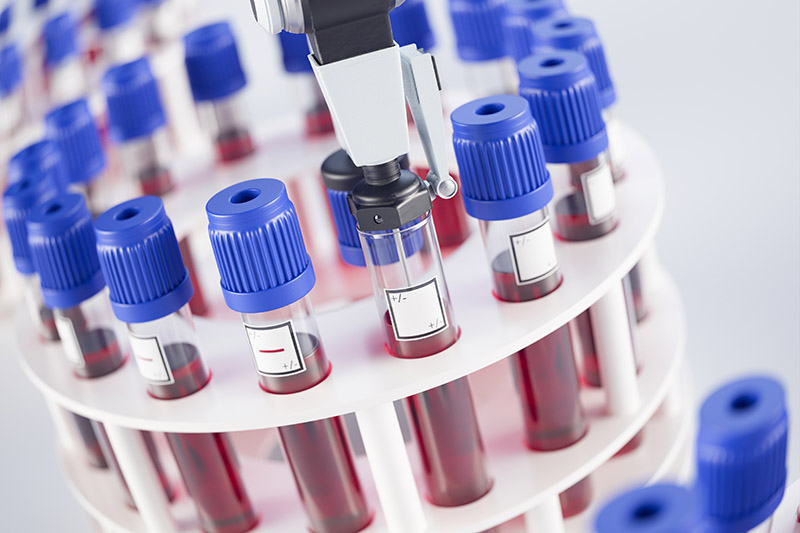
A forensic toxicologist calls with a familiar problem: three overdose deaths in a week, all with fentanyl confirmed, but the clinical picture doesn’t quite fit. The patients remained sedated long after naloxone should have worked. The immunoassay screens came back negative for benzodiazepines. The question: could designer benzodiazepines be involved, and how would the lab even know?
We’ve fielded versions of this call for years. The specific compounds change, but the underlying challenge remains the same: fast-evolving substances that slip past routine screening and complicate everything from patient care to death investigations.
The Growing Presence of Designer Benzodiazepines
While much of the public health focus remains on synthetic opioids, another class of novel psychoactive substances has been quietly complicating overdose investigations and clinical toxicology testing. Designer benzodiazepines, sometimes called novel or illicit benzodiazepines, have become an increasingly common finding in forensic and clinical specimens, both as standalone substances of abuse and as adulterants in opioid supplies.
These compounds present a unique challenge for laboratories. They are structurally similar to prescription benzodiazepines like alprazolam and diazepam, but many were never approved for medical use anywhere in the world. Their pharmacological properties are often poorly characterized, their detection by routine immunoassay screening is unpredictable, and their presence in overdose cases can significantly alter clinical outcomes and interpretation of findings. [1]
In our work with forensic and clinical laboratories over the past several years, we’ve watched designer benzodiazepines move from an occasional finding to a routine consideration in comprehensive drug testing programs. The laboratories that stay ahead of this challenge share a common approach: they treat NPS detection as an ongoing process rather than a one-time panel expansion.
What the Data Tell Us: Prevalence and Trends
The Center for Forensic Science Research and Education (CFSRE), through its NPS Discovery program, has documented the rapid proliferation of designer benzodiazepines across the United States. Their quarterly trend reports consistently show NPS benzodiazepines among the most frequently identified novel psychoactive substances in both toxicology specimens and seized drug materials. [2]
Bromazolam has emerged as the most commonly detected designer benzodiazepine in recent years. Following the DEA’s temporary placement of five designer benzodiazepines, specifically clonazolam, diclazepam, etizolam, flualprazolam, and flubromazolam, in Schedule I in July 2023, bromazolam, which remained unscheduled at the federal level, quickly became the predominant compound identified in forensic cases. [3] In March 2024, the World Health Organization placed bromazolam under Schedule IV of the Convention on Psychotropic Substances, and subsequent regulatory attention is expected to drive another market shift. [4]
That shift may already be underway. CFSRE issued a public alert in late 2025 identifying phenazolam, also known as clobromazolam among online markets, as an emerging compound with increasing detections across the United States. Structurally similar to bromazolam but differing by the addition of a chlorine atom, phenazolam demonstrates the pattern that has defined designer drug markets: as one compound faces regulatory control, alternatives emerge to take its place. [5]
The DEA’s National Forensic Laboratory Information System has documented tens of thousands of encounters involving designer benzodiazepines since 2014. In 2022, compounds including clonazolam, bromazolam, etizolam, and flualprazolam ranked among the top 15 reported tranquilizers and depressants nationally. [6] These compounds have become routine findings in many jurisdictions, making detection capabilities increasingly relevant for laboratories serving diverse testing populations.
Detection Challenges: Why Immunoassays Fall Short
One of the central challenges with designer benzodiazepines is their variable cross-reactivity with standard benzodiazepine immunoassays. Most screening assays were developed to detect diazepam and its metabolites, leaving laboratories with gaps when it comes to newer compounds.
Research published in the Journal of Analytical Toxicology has demonstrated that while some designer benzodiazepines like flualprazolam and bromazolam show cross-reactivity with certain ELISA kits, the degree of cross-reactivity varies considerably between compounds and between assay platforms. Some specimens containing confirmed designer benzodiazepines may screen negative on immunoassay, while others may produce positive screening results that fail to confirm on panels not designed to detect these newer compounds. [7]
Studies comparing multiple immunoassay platforms, including CEDIA, EMIT II Plus, HEIA, and KIMS II, have shown inconsistent detectability for compounds like clonazolam, etizolam, and flubromazepam. [8] The practical reality is straightforward: if your workflow depends on immunoassay screening to flag benzodiazepine cases for confirmation, you’re likely missing designer benzodiazepines.
Confirmatory testing by LC-MS/MS has become essential for laboratories that need to reliably identify designer benzodiazepines. However, building and maintaining a comprehensive confirmation panel requires access to certified reference standards and appropriate quality control materials for each analyte of interest, a consideration that compounds when dealing with a drug class that continues to evolve.
Clinical Implications: Understanding Polysubstance Exposure
The clinical significance of designer benzodiazepines extends beyond analytical detection. When these compounds are present alongside opioids, as they frequently are, the resulting polysubstance exposure creates a more complex overdose scenario that affects patient management and outcome interpretation.
A CDC MMWR report documented that among patients evaluated in emergency departments for suspected opioid overdose who had illicit benzodiazepines detected, at least one opioid was identified in 95% of cases. The co-exposure pattern reflects both intentional polydrug use and the reality that designer benzodiazepines are frequently present as adulterants in opioid supplies. [9]
An important clinical consideration is that naloxone, while effective at reversing opioid-induced respiratory depression, does not affect benzodiazepine intoxication. When a patient has been exposed to both opioids and designer benzodiazepines, naloxone may restore respiratory drive but leave the patient sedated, at ongoing risk for respiratory complications, or requiring extended monitoring beyond standard overdose reversal protocols. [10]
Research published in 2025 examining emergency department outcomes found that patients with novel benzodiazepine coexposure were at higher risk for intubation compared to those with opioid exposure alone. [11] The extended sedation associated with some designer benzodiazepines, which can have elimination half-lives exceeding 100 hours, means that clinical effects may persist considerably longer than naloxone’s duration of action. [12]
For forensic laboratories and medical examiner offices, accurate identification of designer benzodiazepines contributes to understanding the circumstances and cause of death in overdose cases. For clinical laboratories and pain management programs, detection of these compounds can reveal undisclosed substance use and inform treatment planning. The common thread is that reliable detection depends on panels comprehensive enough to catch what’s actually showing up in casework, backed by QC materials that confirm your method is performing when it matters.
Building a Comprehensive Designer Benzodiazepine Panel
For laboratories expanding their NPS testing capabilities, the question of which designer benzodiazepines to prioritize is both practical and strategic. Current prevalence data and regulatory status provide useful guidance, but the real question is whether your testing population makes the difference matter.
Priority analytes for most laboratories include: bromazolam, which remains the most commonly detected designer benzodiazepine; the five compounds temporarily scheduled by DEA in 2023, specifically clonazolam, diclazepam, etizolam, flualprazolam, and flubromazolam; and emerging compounds like phenazolam. Metabolite detection is also important, with 8-aminoclonazolam being a key marker for clonazolam exposure. [13]
Method development should account for the structural diversity within this class. Designer benzodiazepines include both triazolobenzodiazepines, such as clonazolam and flualprazolam, and thienotriazolodiazepines like etizolam. Chromatographic separation and mass spectrometric fragmentation patterns differ between subclasses, and extraction efficiencies may vary by compound and matrix.
Plan for ongoing panel expansion. The designer benzodiazepine market has demonstrated consistent evolution, with new compounds emerging as others face regulatory control. Building flexibility into method validation and QC programs from the outset is more efficient than retrofitting capacity after a new compound has already reached prevalence in case submissions.
Quality Control Best Practices for Designer Benzodiazepines
Reliable QC materials are foundational to confident detection and accurate quantitation of designer benzodiazepines. Several principles are particularly important when establishing or expanding a QC program for these compounds.
Matrix matching supports method performance assessment. Designer benzodiazepines, like other small molecules analyzed by LC-MS/MS, can be affected by matrix effects including ion suppression and enhancement. When evaluating QC materials, laboratories should consider whether the matrix composition allows meaningful assessment of method performance under conditions that approximate authentic specimen behavior. Human-derived matrices generally offer advantages over synthetic alternatives for this purpose.
Stability documentation supports confident use. Benzodiazepines vary in their stability profiles, and designer compounds in particular may not have well-characterized degradation pathways. Laboratories should seek QC materials supported by stability data that allows confident use throughout the documented shelf life. Understanding storage requirements and freeze-thaw limitations is particularly important for compounds with limited published stability information.
Multi-analyte controls can improve workflow efficiency. Given the number of designer benzodiazepines that laboratories may need to monitor, consolidating QC into multi-analyte controls can reduce preparation time and inventory complexity. When evaluating consolidated formulations, laboratories should verify that combining analytes does not compromise individual compound stability or introduce unwanted interactions.
Flexibility addresses evolving testing needs. The designer benzodiazepine landscape changes faster than commercial QC catalogues can typically accommodate. Laboratories detecting emerging compounds may need to work with QC providers who can develop materials for newly prevalent analytes to support method validation and ongoing performance monitoring before standard products become widely available.
Looking Ahead: Staying Current with an Evolving Drug Class
Designer benzodiazepines represent a dynamic challenge for toxicology laboratories. The regulatory-driven cycle of market substitution means that the compounds dominating casework today may be displaced by alternatives within one to two years.
We’ve supported laboratories through several cycles of this evolution, from etizolam’s emergence through bromazolam’s rise to the current early signals around phenazolam. In our experience, the laboratories that navigate these shifts most effectively share a few characteristics: they monitor surveillance data proactively, they maintain relationships with QC providers who can move quickly when new compounds emerge, and they build their validation strategies with expansion in mind rather than treating each new analyte as a separate project.
Monitoring surveillance data from organizations like CFSRE’s NPS Discovery program can help laboratories anticipate which compounds may require attention. Periodic review of panel composition against current prevalence trends ensures that testing remains aligned with the substances actually appearing in case submissions.
For laboratories evaluating their designer benzodiazepine testing capabilities, the key considerations remain consistent: confirmation testing beyond immunoassay screening, matrix-appropriate quality control materials, and the flexibility to expand panels as new compounds emerge. These elements support the accurate results that clinicians, medical examiners, and public health agencies depend on. Our technical team has worked through these challenges across hundreds of laboratory implementations over 50 years. If you’re evaluating your NPS testing capabilities or working through a specific detection challenge, we’re here to talk it through. Reach out at welovecontrol@utak.com or call 888.882.5522.
Designer Benzodiazepine Readiness Checklist
Use this checklist to evaluate your laboratory’s preparedness for designer benzodiazepine detection:
- Confirmation method in place: LC-MS/MS panel includes bromazolam, clonazolam, etizolam, flualprazolam, flubromazolam, and key metabolites
- Emerging compound monitoring: Process for reviewing CFSRE or similar surveillance data quarterly and assessing panel expansion needs
- QC coverage verified: Quality control materials available for all designer benzodiazepines on your panel, with documented stability data
- Matrix appropriateness confirmed: QC matrices match specimen types processed by your laboratory (urine, blood, serum)
- Expansion pathway defined: Validation strategy allows efficient addition of new analytes as prevalence shifts
- QC provider relationship established: Access to custom formulations for newly emerging compounds when commercial products lag behind
References
- Brunetti P, Giorgetti R, Tagliabracci A, Huestis MA, Busardò FP. Designer Benzodiazepines: A Review of Toxicology and Public Health Risks. Pharmaceuticals (Basel). 2021;14(6):560. https://doi.org/10.3390/ph14060560
- Krotulski AJ, Walton SE, DeBord JS, Mohr ALA, Logan BK. NPS Discovery Trend Reports: NPS Benzodiazepines. Center for Forensic Science Research and Education. 2025. https://www.cfsre.org/nps-discovery/trend-reports/nps-benzodiazepines
- Drug Enforcement Administration. Schedules of Controlled Substances: Temporary Placement of Etizolam, Flualprazolam, Clonazolam, Flubromazolam, and Diclazepam in Schedule I. Federal Register. 2023;88 FR 48112. https://www.federalregister.gov/documents/2023/07/26/2023-15748/schedules-of-controlled-substances-temporary-placement-of-etizolam-flualprazolam-clonazolam
- World Health Organization Expert Committee on Drug Dependence. Critical Review Report: Bromazolam. 46th ECDD Meeting. October 2023. https://cdn.who.int/media/docs/default-source/46th-ecdd/bromazolam_46th-ecdd-critical-review_public-version.pdf
- Stang BN, Khorozov NE, Walton SE, et al. Novel Benzodiazepine Phenazolam Increasing in Detections and Prevalence Among U.S. Recreational Drug Markets. CFSRE Public Alert. December 2025. https://www.cfsre.org/nps-discovery/public-alerts
- Drug Enforcement Administration. National Forensic Laboratory Information System (NFLIS-Drug) 2022 Annual Report. https://www.nflis.deadiversion.usdoj.gov/
- Mastrovito R, Trail C, Lino M, et al. Determination of Cross-Reactivity of Novel Psychoactive Substances with Drug Screen Immunoassay Kits in Whole Blood. J Anal Toxicol. 2022;46(7):726-731. https://doi.org/10.1093/jat/bkab110
- Pettersson Bergstrand M, Helander A, Hansson T, Beck O. Detectability of Designer Benzodiazepines in CEDIA, EMIT II Plus, HEIA, and KIMS II Immunochemical Screening Assays. Drug Test Anal. 2017;9(4):640-645. https://doi.org/10.1002/dta.2003
- Aldy K, Mustaquim D, Campleman S, et al. Notes from the Field: Illicit Benzodiazepines Detected in Patients Evaluated in Emergency Departments for Suspected Opioid Overdose — Four States, October 6, 2020–March 9, 2021. MMWR Morb Mortal Wkly Rep. 2021;70(34):1177-1179. https://www.cdc.gov/mmwr/volumes/70/wr/mm7034a4.htm
- Liu S, O’Donnell J, Gladden RM, McGlone L, Chowdhury F. Trends in Nonfatal and Fatal Overdoses Involving Benzodiazepines — 38 States and the District of Columbia, 2019–2020. MMWR Morb Mortal Wkly Rep. 2021;70(34):1136-1141. https://www.cdc.gov/mmwr/volumes/70/wr/mm7034a2.htm
- Hughes A, et al. Novel Benzodiazepines Linked to Greater Severity of Opioid Overdose. Acad Emerg Med. 2025. https://www.medscape.com/viewarticle/novel-benzodiazepines-linked-greater-severity-opioid-2025a1000mzt
- Moosmann B, Huppertz LM, Hutter M, Buchwald A, Ferlaino S, Auwärter V. Detection and Identification of the Designer Benzodiazepine Flubromazepam and Preliminary Data on Its Metabolism and Pharmacokinetics. J Mass Spectrom. 2013;48(11):1150-1159. https://doi.org/10.1002/jms.3279
- Ballotari M, Truver MT, Dhoble LR, et al. Identifying Bromazolam, Etizolam, and Flualprazolam in Blood Using Gas Chromatography–Mass Spectrometry. J Forensic Sci. 2025;70(2). https://doi.org/10.1111/1556-4029.70003
Related Resources
Custom Drugs of Abuse Quality Controls: Information about custom QC solutions for novel psychoactive substances
Monitoring the Dark Web for Emerging Drug Threats: How early warning systems track new substances entering the drug supply