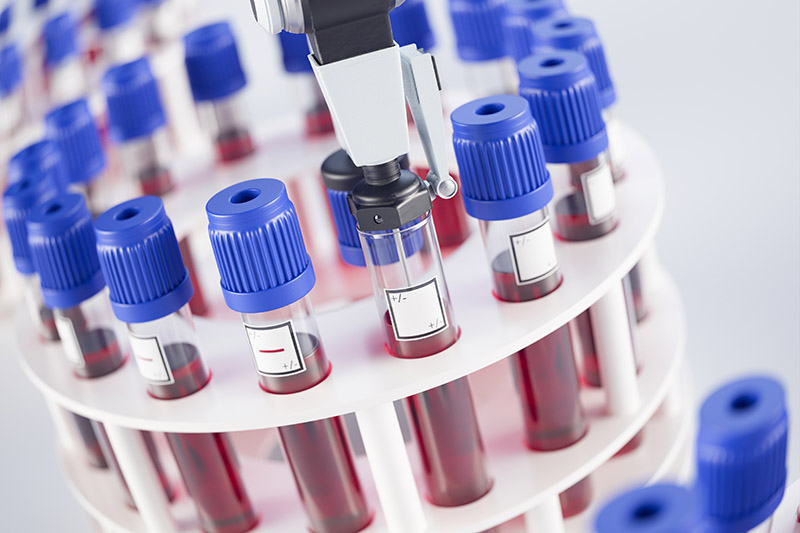
A forensic toxicologist runs a comprehensive opioid panel on a suspected overdose case. The immunoassay screens negative. The fentanyl confirmation comes back clean. But the death scene and clinical presentation say opioid overdose. What’s missing?
Increasingly, the answer is nitazenes.
We’ve been in the quality control business for over 50 years, and we’ve watched the synthetic opioid landscape shift multiple times, from the early days of fentanyl analogs through the xylazine surge. Nitazenes represent the next chapter in that evolution, and laboratories that prepare now will be far better positioned than those who wait for the problem to arrive at their bench.
This article provides laboratories with essential information about nitazene detection, including why these compounds pose analytical challenges, what detection strategies work, and how to build a quality control program that supports reliable identification and reporting.
Understanding Nitazenes
Nitazenes were first synthesized in the late 1950s by the pharmaceutical research laboratories of the Swiss chemical company CIBA as potential analgesic agents [1, 2]. Despite demonstrating potent opioid activity in preclinical studies, they were never approved for medical use due to an unfavorable therapeutic index [3]. These compounds remained largely obscure until approximately 2019, when isotonitazene was first identified in the illicit drug supply in the United States [1, 4].
Multiple surveillance programs now report increasing nitazene detections. According to the United Nations Office on Drugs and Crime (UNODC) Early Warning Advisory, 34 nitazene analogues have been reported since 2019, with detections across at least 37 countries [5]. The Drug Enforcement Administration (DEA) has classified multiple nitazenes as Schedule I controlled substances, including isotonitazene, metonitazene, and protonitazene [6]. The DEA’s 2025 National Drug Threat Assessment warns that “powerful synthetic drugs like nitazenes” are being encountered with growing frequency [7].
What makes nitazenes analytically and clinically significant is their potency. In vitro studies have demonstrated that many nitazenes exhibit high-to-very high mu-opioid receptor (MOR) affinity and potency, often greater than that of fentanyl [8, 9]. In animal models, several nitazene analogs have demonstrated potency estimated at hundreds of times greater than morphine [3, 10]. It is important to note that animal model potency does not translate directly to human toxicity, and potency estimates vary by analog, assay methodology, and experimental conditions [3]. Nevertheless, forensic case data confirms that clinically relevant concentrations span a wide range, from sub-ng/mL levels to approximately 50 ng/mL or higher depending on the analog [11, 12, 13].
Common Nitazene Compounds: A Tiered Approach
With over 20 nitazene analogs identified in the literature, laboratories must prioritize which compounds to include in their testing panels [5]. In our experience working with forensic and clinical laboratories, a tiered approach based on prevalence and risk helps focus resources where they matter most.
Tier 1: Most Commonly Encountered
Isotonitazene and metonitazene represent the most frequently reported nitazenes in current forensic casework [4, 5, 11]. If you’re establishing or expanding nitazene testing, start here.
Tier 2: Emerging and High-Risk
Protonitazene, etonitazene, and N-pyrrolidino etonitazene (commonly called “pyro” or “etonitazepyne”) have appeared in casework with increasing frequency [11, 14]. Whether to include these depends on your regional trends and laboratory capacity, but we’re seeing more labs add them as standard practice.
Tier 3: Surveillance
Additional compounds such as flunitazene, butonitazene, and metodesnitazene may warrant inclusion for laboratories serving regions with documented detections or those seeking comprehensive surveillance capabilities [11]. Metabolite detection may also be valuable for urine testing, as parent compound concentrations can be low due to extensive metabolism [15].
Why Standard Screening Often Misses Nitazenes
Here’s the core problem: nitazenes are often not detected by routine opioid or fentanyl immunoassays. A 2025 study in the Journal of Forensic Sciences tested seven nitazene analogs against 13 commercial ELISA kits and found that none of the tested kits produced a signal sufficient for a positive result [16]. The researchers concluded that “these findings highlight the need for laboratories to adopt mass spectral-based screening methods like HRMS or advocate for the development of nitazene-specific ELISA kits” [16].
The structural differences between nitazenes and traditional opioids explain this detection gap. Nitazenes contain a benzimidazole core structure that differs substantially from the phenanthrene ring system found in morphine and related compounds, or the piperidine scaffold of fentanyl [2, 3]. Antibodies developed for conventional opioid immunoassays generally do not recognize these structurally distinct molecules [16, 17].
The practical implications are significant. Medical examiners investigating suspected opioid overdose deaths may obtain negative immunoassay results despite nitazene exposure [3]. Naloxone remains effective against nitazenes due to their mu-opioid receptor activity, though higher or repeated doses may be required given their potency [3, 18]. The real question for your laboratory is whether your current workflow would catch a nitazene case, or whether it would slip through as an unexplained negative.
LC-MS/MS Method Development Considerations
Liquid chromatography-tandem mass spectrometry (LC-MS/MS) represents the method of choice for nitazene detection and confirmation [16, 19]. We’ve worked with laboratories through numerous method implementations for emerging analytes, and nitazenes present some specific technical considerations worth addressing early.
Chromatographic Separation
Chromatographic separation should be optimized to resolve structurally similar nitazene analogs, as many compounds in this class share similar fragmentation patterns and may co-elute under suboptimal conditions [19]. Isomeric compounds require particular attention; for example, isotonitazene and protonitazene are structural isomers that require baseline chromatographic separation [19]. Verify separation of all target analytes under your specific column and gradient conditions before moving to validation.
MRM Transitions and Qualifier Ions
Multiple reaction monitoring (MRM) transitions should be selected to provide adequate selectivity while accounting for potential isobaric interferences. Including at least two MRM transitions per analyte (one quantifier and one qualifier) is recommended, with qualifier ion ratio monitoring to confirm analyte identity [19, 20]. This is particularly important given the structural similarities among nitazene analogs and the potential for novel compounds to appear in the drug supply. Don’t skip this step; it’s what separates defensible results from ones that get challenged.
Performance Targets
Given the potency of nitazenes, methods should target lower limits of quantification (LLOQ) appropriate for the expected concentration range in your casework. Published case data demonstrates considerable variability: etodesnitazene blood concentrations have ranged from 0.1 to 120 ng/mL, while isotonitazene concentrations typically fall in the low ng/mL range [11, 12]. Sensitivity requirements should be evaluated based on available case data and published literature rather than extrapolated from other opioid classes.
Sample Preparation
Extraction efficiency requires attention during method development. Nitazenes are generally lipophilic compounds that may require optimization of sample preparation protocols, particularly for postmortem specimens where matrix effects can be pronounced [11, 19]. Solid-phase extraction (SPE) or liquid-liquid extraction (LLE) methods should be validated for recovery across the relevant concentration range, and matrix effects should be systematically evaluated.
Quality Control Program Development
Implementing reliable nitazene detection requires thoughtful quality control program design. We’ve helped laboratories work through QC development for dozens of emerging analytes over the years, and several principles consistently apply.
Matrix Matching
QC materials should be prepared in the same matrix types the laboratory analyzes, whether urine, blood, serum, or oral fluid. Performance characteristics can differ significantly between aqueous standards and biological matrices, and matrix-matched controls provide the most accurate assessment of method performance in routine operation. Human biological matrices generally offer better simulation of actual specimen behavior compared to synthetic or surrogate matrices. This isn’t just theoretical preference; we’ve seen real performance differences when labs switch from surrogate to human matrix QC.
Concentration Level Selection
QC levels should be selected based on method performance requirements and the concentration range you expect to encounter in casework. For nitazenes, that range is broader than many labs initially assume, spanning from sub-ng/mL levels to approximately 50 ng/mL or higher [11, 12, 13]. A practical approach includes a low QC near the LLOQ to monitor sensitivity, a mid-range QC for precision assessment, and a high QC to evaluate linearity and upper reportable range. The key is matching your QC concentrations to what you actually expect to see at the bench, not to arbitrary numbers.
Stability Considerations
Stability characteristics for nitazenes in various matrices are still being characterized in the literature [21]. Until more comprehensive data are available, take a conservative approach: store frozen, minimize freeze-thaw cycles, and document handling conditions carefully. Validating stability at your laboratory’s LLOQ is particularly important, as low-concentration analytes may be more susceptible to degradation. When in doubt, err on the side of caution with storage duration.
Multi-Analyte Approaches
Given the polydrug nature of many nitazene-positive cases, QC materials that combine nitazenes with other synthetic opioids, fentanyl analogs, and common adulterants can provide workflow efficiency while ensuring comprehensive coverage. Forensic case series consistently show that nitazenes are commonly detected alongside other CNS depressants, particularly fentanyl and novel benzodiazepines, with xylazine identified in approximately one-third of cases [11]. We’ve seen this multi-analyte approach work well for laboratories managing complex synthetic opioid panels.
Implementation Framework
Laboratories planning to implement nitazene detection should consider a structured approach addressing the following elements:
- Reference standards: Obtain certified reference standards for target nitazenes and relevant metabolites from reputable suppliers, with appropriate chain of custody documentation.
- Internal standards: Deuterated internal standards for each target analyte are strongly recommended to compensate for matrix effects and extraction variability [19].
- Quality control materials: Establish matrix-matched QC materials at multiple concentration levels that reflect the range you expect in casework, from near-LLOQ through higher concentrations.
- Method validation: Validate for precision, accuracy, linearity, sensitivity, specificity, carryover, and matrix effects according to SWGTOX, FDA, or applicable accreditation requirements [20].
- Ongoing surveillance: Monitor emerging nitazene variants through professional networks, public health alerts, DEA reports, and published literature to maintain panel relevance.
Looking Ahead
Nitazenes represent an evolving challenge for toxicology laboratories, but it’s a challenge that favors the prepared. We’ve watched laboratories navigate similar transitions before, from the early fentanyl analog expansion through the xylazine emergence, and the pattern is consistent: laboratories that move early spend less time scrambling later.
The xylazine case study illustrates how laboratories have successfully implemented testing for novel compounds when commercial options were limited. The same principles apply to nitazenes: identify your target analytes, secure appropriate reference materials and QC, validate your method, and build the workflow before case volume forces your hand.
Our technical team has worked through these challenges across hundreds of implementations over the past five decades. If you’re thinking through nitazene testing for your laboratory, whether you’re starting from scratch or expanding an existing synthetic opioid panel, we’re here to talk through your specific situation. Sometimes a 15-minute conversation saves weeks of troubleshooting down the road.
References
- Drug Enforcement Administration Diversion Control Division. Benzimidazole-Opioids. U.S. Department of Justice.
- Ujváry I, Christie R, Evans-Brown M, et al. DARK Classics in Chemical Neuroscience: Etonitazene and Related Benzimidazoles. ACS Chem Neurosci. 2021;12(7):1072-1092.
- Pergolizzi J, Raffa R, LeQuang JAK, et al. Old Drugs and New Challenges: A Narrative Review of Nitazenes. Cureus. 2023;15(6):e40736.
- Krotulski AJ, Papsun DM, Kacinko SL, Logan BK. Isotonitazene Quantitation and Metabolite Discovery in Authentic Forensic Casework. J Anal Toxicol. 2020;44(6):521-530.
- United Nations Office on Drugs and Crime Early Warning Advisory. Nitazenes – A New Group of Synthetic Opioids Emerges. February 2024.
- Drug Enforcement Administration Diversion Control Division. Nitazenes. U.S. Department of Justice.
- Drug Enforcement Administration. 2025 National Drug Threat Assessment. Washington, DC: U.S. Department of Justice; 2025.
- Kozell LB, Eshleman AJ, Wolfrum KM, et al. Pharmacologic Characterization of Substituted Nitazenes at μ, κ, and δ Opioid Receptors Suggests High Potential for Toxicity. J Pharmacol Exp Ther. 2024;389(2):219-228.
- Kozell LB, Eshleman AJ, Wolfrum KM, et al. Pharmacology of Newly Identified Nitazene Variants Reveals Structural Determinants of Affinity, Potency, Selectivity for Mu Opioid Receptors. Neuropharmacology. 2025;276:110512.
- Glatfelter GC, Vandeputte MM, Chen L, et al. Alkoxy Chain Length Governs the Potency of 2-Benzylbenzimidazole ‘Nitazene’ Opioids Associated with Human Overdose. Psychopharmacology (Berl). 2023;240(12):2573-2584.
- De Vrieze LM, Walton SE, Pottie E, et al. In Vitro Structure-Activity Relationships and Forensic Case Series of Emerging 2-Benzylbenzimidazole ‘Nitazene’ Opioids. Arch Toxicol. 2024;98(9):2999-3018.
- Tishion P, Derrick D, Sorrentino J, Cooper G. Validation of an Analytical Method for Quantitation of Metonitazene and Isotonitazene in Plasma, Blood, Urine, Liver and Brain. J Anal Toxicol. 2023;47(8):648-658.
- Kriikku P, Ojanperä I. Post-Mortem Identification and Toxicological Findings of Fluetonitazepyne and Isotonitazepyne. Drug Test Anal. 2025. doi:10.1002/dta.3928
- Vandeputte MM, Krotulski AJ, Walton SE, et al. Pharmacological Evaluation and Forensic Case Series of N-Pyrrolidino Etonitazene (Etonitazepyne). Arch Toxicol. 2022;96(6):1845-1863.
- Taoussi O, Berardinelli D, Zaami S, et al. Human Metabolism of Four Synthetic Benzimidazole Opioids: Isotonitazene, Metonitazene, Etodesnitazene, and Metodesnitazene. Arch Toxicol. 2024;98(7):2101-2116.
- Pacana AL, Skillman BN. Evaluation of Enzyme-Linked Immunosorbent Assay Screening Kits for the Detection of Nitazene Analogs. J Forensic Sci. 2025;70(3):1042-1051.
- De Vrieze LM, Stove CP, Vandeputte MM. Nitazene Test Strips: A Laboratory Evaluation. Harm Reduct J. 2024;21:157.
- Geldner N, Eike A, Vindenes V. Nitazenes: Review of Comparative Pharmacology and Antagonist Action. Clin Toxicol. 2025. doi:10.1080/15563650.2025.2504133
- Walton SE, Krotulski AJ, Logan BK. A Forward-Thinking Approach to Addressing the New Synthetic Opioid 2-Benzylbenzimidazole Nitazene Analogs by LC-QQQ-MS. J Anal Toxicol. 2022;46(3):221-231.
- SWGTOX. Scientific Working Group for Forensic Toxicology Standard Practices for Method Validation in Forensic Toxicology. 2013.
- Parks C, Maskell PD, McKeown DA, Couchman L. Identification of 5-Aminometonitazene and 5-Acetamidometonitazene in a Postmortem Case: Are Nitro-Nitazenes Unstable?. J Anal Toxicol. 2024;48(9):691-700.